
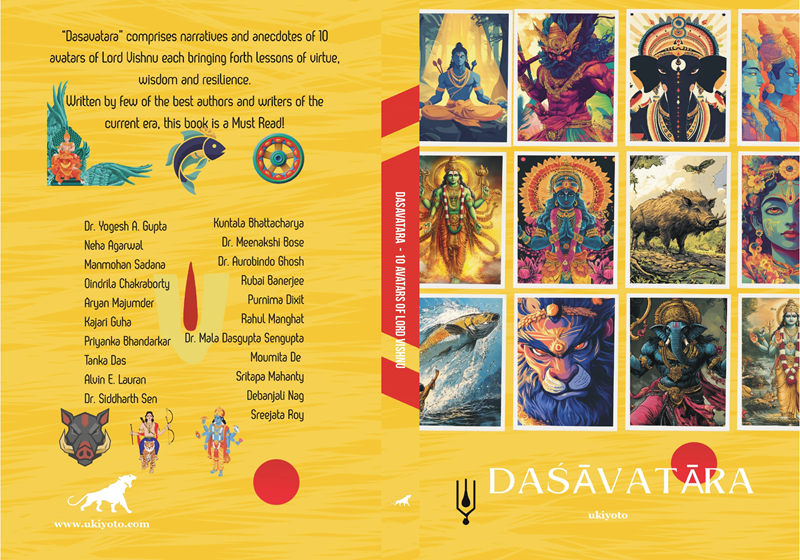
The Dashavatara, the ten divine incarnations of Lord Vishnu, narrate the timeless journey of preserving dharma and restoring cosmic balance. Whenever evil threatens the world and righteousness declines, Vishnu manifests in different forms, each avatar embodying a unique purpose, virtue, and lesson for humanity.
The story of the Dashavatara is not merely a sequence of divine incarnations but a profound exploration of human evolution, morality, and consciousness. Each avatar represents a different stage in the eternal struggle between order and chaos, guiding humanity toward truth, justice, and spiritual awakening.
1. Matsya (The Fish)
Matsya, the first avatar of Lord Vishnu, appeared as a giant fish to save humanity and the sacred Vedas during a great cosmic flood. This avatar symbolizes protection, guidance, and the preservation of knowledge in times of crisis.
2. Kurma (The Tortoise)
Kurma, the second avatar, took the form of a giant tortoise to support Mount Mandara during the churning of the ocean (Samudra Manthan). It represents patience, stability, endurance, and the importance of supporting great endeavors.
3. Varaha (The Boar)
Varaha rescued Bhudevi (Mother Earth) after the demon Hiranyaksha dragged her into the cosmic ocean. This avatar symbolizes strength, courage, protection, and the restoration of balance and righteousness (dharma).
4. Narasimha (The Man-Lion)
Narasimha, a half-man and half-lion, appeared to destroy the tyrant Hiranyakashipu and protect his devoted son Prahlada. He represents divine justice, fearlessness, and the triumph of faith over evil.
5. Vamana (The Dwarf Brahmin)
Vamana humbled the mighty king Bali by requesting three steps of land and then expanding to cover the entire universe. This avatar teaches humility, wisdom, and the limits of pride and worldly power.
6. Parashurama (The Warrior with an Axe)
Parashurama appeared to eliminate corrupt and oppressive rulers who had abused their authority. He symbolizes discipline, justice, righteous anger, and the restoration of moral order.
7. Rama (The Ideal King)
Rama, the hero of the Ramayana, defeated Ravana and upheld truth, duty, and righteousness despite great personal sacrifice. He represents honor, integrity, leadership, and devotion to dharma.
8. Krishna
Krishna guided humanity through his teachings in the Bhagavad Gita and played a central role in the Mahabharata. He symbolizes love, wisdom, compassion, strategy, and the pursuit of righteousness through knowledge and action.
9. Buddha
In the Dashavatara tradition followed by many Hindus, Buddha is regarded as an incarnation of Vishnu who taught compassion, non-violence, and the path to enlightenment. He represents peace, self-awareness, and freedom from suffering through wisdom.
10. Kalki (The Future Avatar)
Kalki is the prophesied future avatar who will appear at the end of the Kali Yuga, riding a white horse and wielding a blazing sword. He will destroy evil, restore dharma, and usher in a new age of truth and righteousness.
My storyline is intense, layered with desire, deception,
violence, illusion and consequences- which makes it very
suitable to be interpreted through the lens of the Dashavatara
(Ten Avatars of Vishnu) in a modern psychological
Varaha – The Boar
Varaha is the third avatar of Lord Vishnu. This avatar represents the divine rescue of Earth and the triumph of good over evil.
A powerful demon named Hiranyaksha performed intense penance and received a boon that made him nearly invincible. He defeated the gods and disturbed cosmic balance. He dragged Bhudevi (Mother Earth) to the bottom of the cosmic ocean causing chaos in the universe.
Vishnu manifested as Varaha, a gigantic and powerful wild boar. With a thunderous roar. Varaha dived into the cosmic ocean. Deep under water, Varaha confronted Hiranyaksha.
A fierce battle lasted for a thousand celestial years. The demon used powerful weapons and mystical abilities. Varaha finally slew Hiranyaksha. The gods praised Vishnu for restoring dharma. Varaha lifted Bhudevi, raised her out of the ocean, restored her to her proper place in the universe.
Varaha represents:
Strength and protection.
The rescue of soul from ignorance.
Divine can take any form to protect creation.
In the modern psychological framework of this storyline, Maya embodies the Varaha archetype. Throughout the narrative, she is forced to confront deception, violence, emotional manipulation, and the consequences of hidden desires. These forces threaten to bury her identity beneath fear and confusion, much like Bhudevi sinking into the cosmic ocean. Rather than surrendering, Maya finds the courage to descend into the darkest corners of her own reality, confronting painful truths and powerful adversaries that seek to control or silence her.
Her struggle is not simply against external enemies but against the psychological forces that attempt to destroy her sense of self. Every difficult choice, every confrontation and every act of resilience becomes part of her battle against the metaphorical Hiranyaksha. Through perseverance, courage, and an unwavering commitment to truth, she gradually restores balance to her life. Like Varaha lifting Bhudevi from the depths, Maya reclaims her dignity, identity and inner strength.
Thus, Varaha becomes the perfect symbolic reflection of Maya’s journey. It reminds us that true heroism lies in confronting darkness without losing compassion, rescuing what is sacred within ourselves and proving that even in the deepest chaos, strength guided by righteousness can restore hope, justice, and harmony.
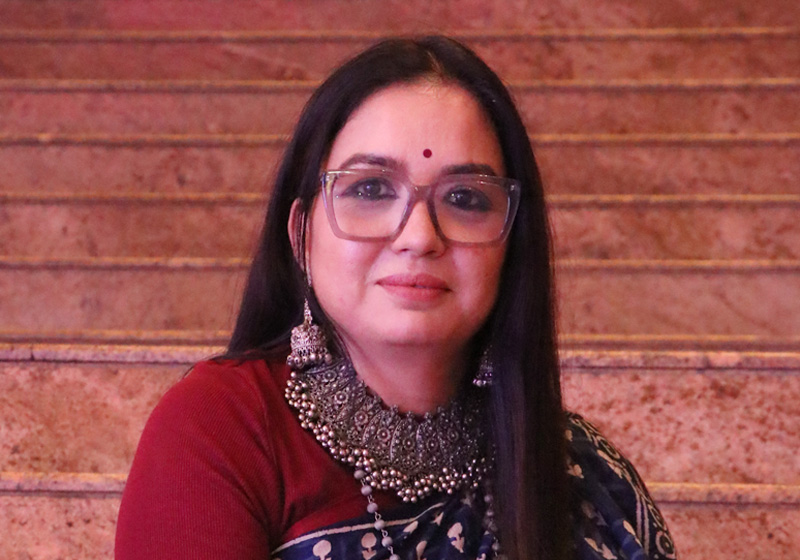
Neha Agarwal
Dasavatara can be purchased-
https://www.ukiyotoindia.com/product-page/dasavatara-10-avatars-of-lord-vishnu
_1785565843273265746.png)
_1784621308499509317.png)








_17845355431793601954.png)
_17845343502042983042.png)





_1775802291867133499.png)


_17682042751183439908.png)



_1767938263876964930.jpg)
_17679378251948094411.jpg)
_1767937679253137841.jpg)

_1759130674453280466.jpg)


_1759130811279986953.jpg)


_1759126311975119161.png)
_1759126212229099568.jpg)




_17591256051481926712.jpg)




_1754639333611524265.png)